Author: Hasanen Ghaleb
Across many post-conflict environments, communities knowingly enter land contaminated by landmines, improvised explosive devices (IEDs), and unexploded ordnance (UXO) to cultivate crops. This behavior is often misunderstood as recklessness or poor risk awareness. In reality, it reflects a forced livelihood decision shaped by poverty, displacement, limited alternatives, and prolonged delays in clearance.
This pattern has become more pronounced in recent years as humanitarian mine action funding has declined globally, including in Iraq, reducing the number of active clearance teams and extending the time communities must wait for safe land release.
Livelihood Pressure as the Primary Driver
In rural and peri-urban areas, agriculture is frequently the only available source of income. When safe land is unavailable, households make calculated decisions to accept risk in order to survive.
In Iraq—particularly in Ninewa Governorate—explosive contamination often overlaps with fertile agricultural land and irrigation corridors. The United Nations Mine Action Service has consistently documented civilian accidents occurring during farming, grazing, and land preparation, emphasizing that these incidents are linked to livelihood activities rather than risk-seeking behavior.
https://www.unmas.org/en/where-we-work/iraq
Reduced Clearance Capacity and Prolonged Exposure
The risk has increased as clearance capacity has contracted. Donor fatigue, shifting global crises, and competing humanitarian priorities have resulted in fewer clearance assets on the ground, extending contamination timelines.
The Geneva International Centre for Humanitarian Demining warns that prolonged delays in land release lead to unsafe land use becoming normalized, particularly in agricultural communities dependent on seasonal cycles.
https://www.gichd.org/resources/publications/
When contamination persists for years, communities adapt—not by avoiding land, but by learning to live with danger.
Risk Awareness Does Not Necessarily Prevent Exposure
Evidence from Iraq and other mine-affected countries demonstrates that knowledge of explosive hazards does not automatically lead to safer behavior. Even in communities with strong Explosive Ordnance Risk Education (EORE) coverage, economic pressure often outweighs perceived risk.
The Landmine and Cluster Munition Monitor notes that livelihood needs are one of the strongest predictors of continued exposure to explosive hazards worldwide.
https://www.the-monitor.org/en-gb/reports/2023.aspx
This dynamic is not theoretical—it is visible on the ground.
Field Evidence from Tel-Afar: When Survival Overrides Fear
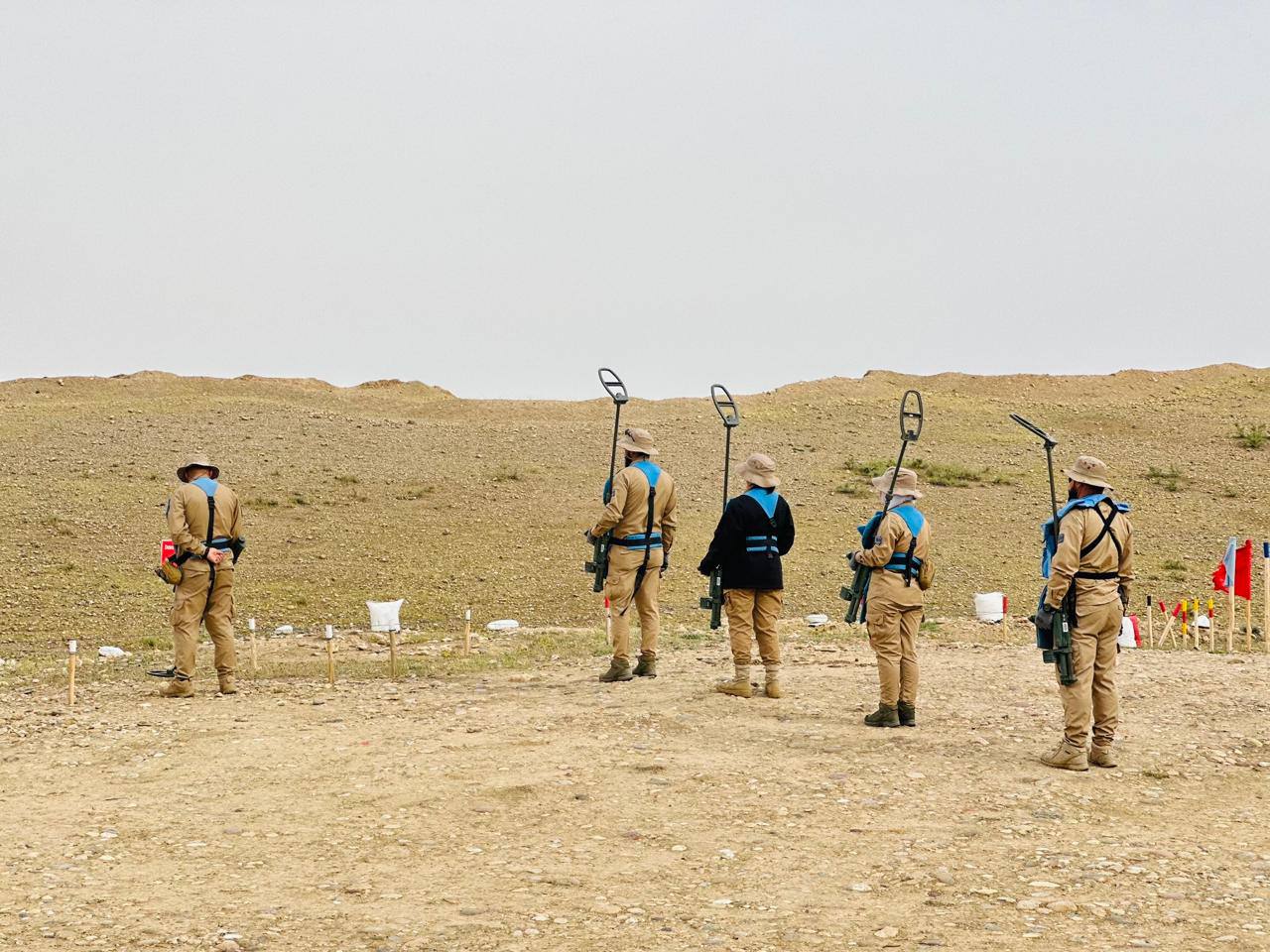
A recent operational case from Tel-Afar, in Ninewa Governorate, illustrates this reality with striking clarity. In one confirmed Hazard Area under active clearance operations, the land had already recorded three separate explosive accidents. One incident resulted in the amputation of both legs of the landowner’s cousin. In another, the landowner himself was injured when an IED detonated while he was preparing the land for seeding.
Despite these severe incidents, agricultural use of the land did not cease. The landowner re-entered the contaminated area and continued cultivation, reflecting the absence of viable livelihood alternatives.
Yet this same case also reveals an important nuance. When clearance teams initiated preparations to conduct full clearance of the site, the landowner stated that he was willing to lose the current agricultural season’s crop if it meant the land could be cleared properly. His priority was not short-term yield, but the ability to return to his land safely and permanently once clearance was completed.
This shift underscores a critical insight: when communities trust that clearance will be completed within a realistic timeframe, their behavior changes. Immediate risk acceptance can give way to cooperation and short-term sacrifice in exchange for long-term safety.
The Geneva International Centre for Humanitarian Demining highlights this dynamic, noting that community support for clearance increases when land release is credible, predictable, and clearly communicated.
At the same time, this case is not representative everywhere. In many other locations, landowners and users may delay or block clearance operations to protect standing crops or seasonal income, especially where no interim livelihood support exists. The United Nations Mine Action Service identifies access constraints linked to livelihood concerns as a recurring operational challenge across Iraq.
https://www.unmas.org/en/where-we-work/iraq
Agriculture and Explosive Contamination: A Global Pattern
Agricultural activity remains one of the leading causes of civilian mine and UXO accidents worldwide. Ploughing, irrigation trenching, and harvesting disturb soil layers where explosive items remain buried.
The Food and Agriculture Organization of the United Nations confirms that contamination of arable land directly undermines food security and post-conflict recovery, often forcing communities into unsafe coping strategies.
https://www.fao.org/emergencies/emergency-types/explosive-hazards/en/
Similar patterns have been documented in Afghanistan, Cambodia, South Sudan, and more recently Ukraine, demonstrating that this is a systemic global issue, not an Iraq-specific anomaly.
The International Committee of the Red Cross stresses that when survival is at stake, communities often make rational decisions to accept risk, even after witnessing injury or death.
https://www.icrc.org/en/what-we-do/explosive-hazards
Conclusion
The continued use of mined and UXO-contaminated land for agriculture is not driven by ignorance or denial. It is a consequence of constrained choices, shaped by poverty, funding gaps, delayed clearance, and the absence of alternative livelihoods.
The Tel-Afar case demonstrates both sides of this reality: the willingness to accept extreme risk when no options exist, and the readiness to support clearance—even at short-term economic cost—when safe land release becomes tangible.
As clearance capacity declines globally, civilian exposure is likely to increase unless mine action, livelihoods support, and development interventions are pursued together. Without this integrated approach, communities will continue to face an impossible choice between safety and survival.